Congratulations, You Spent $60 on a Book About Owning Less — and Displayed It Prominently on Your Shelf
Let's take a moment to appreciate the specific kind of genius it takes to turn anti-consumerism into a consumer category. Not just any category — a premium one, with a muted color palette, a sans-serif font, and a price tag that would make your grandmother audibly gasp.
Minimalism, for those who need a refresher, is the philosophical idea that owning fewer things leads to a freer, more intentional life. It was popularized by Japanese organizing consultant Marie Kondo, a Netflix documentary or two, and approximately forty thousand Instagram accounts featuring bare white walls and a single artisanal candle. The message was simple: less is more. Stuff is a burden. Let go.
And boy, did Americans hear that message. Then they went to Anthropologie.
The Shopping List for Not Shopping
Here is a partial inventory of what you apparently need to live a life of radical simplicity:
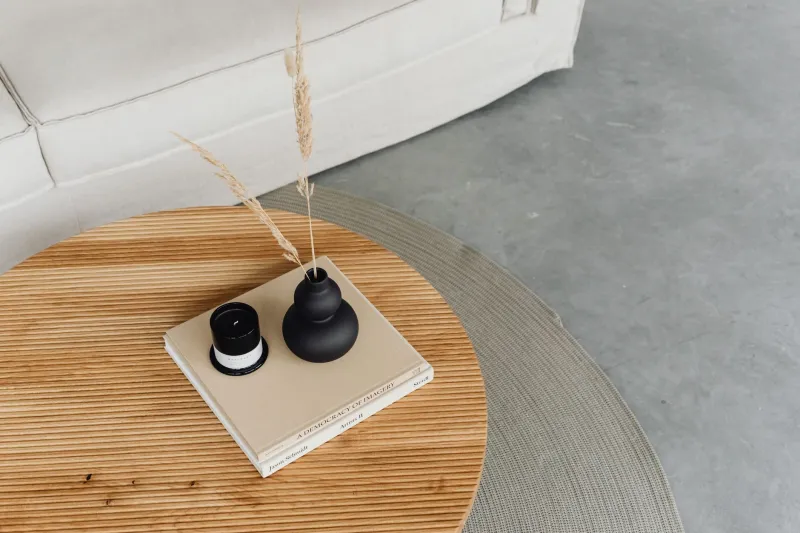
A $60 hardcover book about minimalism. A $90 linen storage basket to hold your other storage baskets. A $280 ceramic lamp that looks like someone gave up halfway through sculpting it. A $45 beeswax candle in an "unscented" scent called something like Quiet or Nothing or Absence. A $400 coffee table that is, crucially, the only thing on the coffee table — except for the $60 book about minimalism.
The math is not mathing, and yet here we are, nodding along like this all makes perfect sense.
The real trick of the minimalism industrial complex is that it reframed shopping as curation. You're not buying more stuff. You're carefully selecting fewer, better things. You're not spending money. You're investing in intentionality. It's the same $700, but spiritually it's totally different.
Marie Kondo Did Not Tell You to Buy a $200 Drawer Organizer Set
Let's be fair to Marie Kondo for a second. The woman wrote a book about tidying. A practical, earnest book about folding your T-shirts into little rectangles and thanking your belongings before you donate them. It was a little quirky, deeply sincere, and genuinely useful for a lot of people.
Then the American market looked at it and said: but what if we made it a whole thing?
Now there are minimalism podcasts, minimalism YouTube channels, minimalism retreats in Joshua Tree where you pay $3,500 to sleep on a platform bed in a glass box and stare at the desert. There are minimalist meal prep services, minimalist skincare routines with twelve steps, and minimalist wardrobes that require purchasing an entirely new wardrobe because your old one wasn't the right kind of simple.
The irony isn't even hiding anymore. It's sitting right there on the coffee table, hardcover, 256 pages, $60 retail.
The Aesthetic Is the Point (And Also the Problem)
Here's what nobody wants to say out loud: for a lot of people, minimalism isn't really a philosophy. It's a vibe. A very specific, very expensive vibe involving neutral tones, natural textures, and the complete absence of anything that looks like it came from Target — even though half of it did, and Target has a whole minimalist line now, so.
The visual language of minimalism has become so codified that it's basically a uniform. Cream walls. Raw wood. A plant that looks like it costs more than your car payment. One oversized bowl on a kitchen island. The bowl is empty. The bowl is always empty. What is the bowl for? The bowl is for looking at. The bowl is a statement. The bowl says: I have transcended the need for objects while also owning this very intentional object.
And the Instagram grid? Immaculate. Every photo looks like a Scandinavian furniture catalog crossed with a meditation app loading screen. Nothing is out of place because nothing is in place — that's the whole bit. The absence of clutter is itself the content.
The Nightstand Situation
But let's talk about the nightstand. Because that's where the real confessions live.
You know the nightstand. The one buried under four self-improvement books (including the minimalism one), a gratitude journal you've used twice, a crystal someone gave you for your birthday, a half-finished water bottle, a lip balm, a phone charger, a backup phone charger, and a small dish that was supposed to hold only your rings but now holds two rings, a hair tie, a parking receipt from November, and a button.
The nightstand is the truth. The open shelving in the living room is the Instagram. We are all living in the gap between those two surfaces, and honestly, that gap is very relatable.
Are We Crazy, Or Is This Just Tuesday?
Look, nobody is here to tell you how to spend your money or organize your home. If a $60 book about owning less genuinely changed your life, that's wonderful — truly. If the linen basket brought you joy, spark away.
But maybe, just maybe, we could acknowledge the particular comedy of a philosophy built around rejecting consumer culture becoming one of the most aggressively marketed consumer aesthetics of the last decade. We could sit with the fact that "less is more" somehow resulted in more — more products, more content, more identity construction, more spending on the appearance of not spending.
Minimalism was supposed to be the exit ramp off the consumption highway. Instead, we built a gift shop at the exit ramp. Then we Instagrammed the gift shop. Then we wrote a coffee table book about the gift shop.
It's beautiful, honestly. Very clean lines. Great natural light. Completely insane.