Strangers Are Alphabetizing Their Sock Drawers Online and We Cannot Look Away
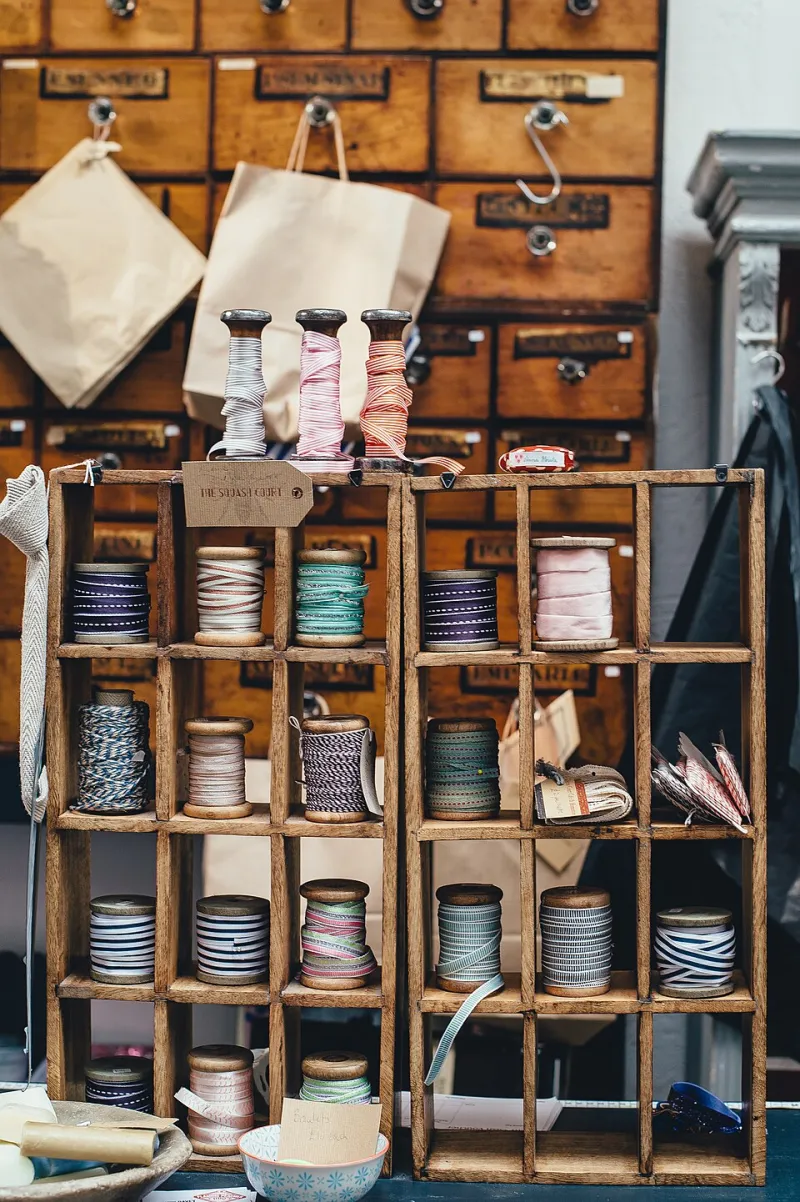
Photo: Annie Spratt anniespratt, CC0, via Wikimedia Commons
Let's establish something upfront: you are a reasonable adult. You have responsibilities. You probably own at least one piece of furniture that wasn't purchased off a curb. And yet, if someone told you there's a YouTube channel where a soft-spoken woman in Ohio spends forty-five minutes sorting vintage buttons by shade of mauve, you would be over there immediately. Don't lie. We all would.
Welcome to the micro-niche content economy — the strangest, most specific, and somehow most lucrative corner of the internet that absolutely nobody predicted and that all of us helped create.
How Did We Get Here, Exactly?
Once upon a time, "content" meant television. Then it meant blogs. Then it meant YouTube videos of cats knocking things off tables, which, fine, was a reasonable cultural evolution. But somewhere around 2019, something shifted. Algorithms got smarter, attention spans got shorter, and a guy in suburban New Jersey discovered that filming himself pressure-washing his driveway with baroque levels of commitment could pull in more views than a network sitcom.
Now we have entire ecosystems of content built around the most granular possible human activities. Extreme ironing. Competitive cup stacking. Footage of people reorganizing their pantries with the solemn focus of a surgeon. There are creators making a full-time living — we're talking mortgage-paying, vacation-taking, health-insurance-buying living — by filming themselves sort through hardware store bins of mismatched screws.
And the audience? Enormous. Ravenous. Invested.
The Content Is Boring. That's the Whole Point.
Here's what's genuinely fascinating about this phenomenon: the appeal isn't despite the mundanity. It is the mundanity. In a media landscape designed to maximize anxiety — breaking news, culture wars, your ex's suspiciously thriving Instagram — watching someone methodically decant dry pasta into matching glass containers is practically medicinal.
Psychologists have a term for this: "autonomous sensory meridian response," or ASMR. But this goes beyond the tingling-scalp crowd. What these organizing and sorting videos tap into is something deeper — a craving for order in a world that feels like it's being run by a golden retriever who got into the espresso. When everything outside is chaotic, watching a stranger color-code their spice rack scratches a primal itch that no amount of journaling or yoga has quite managed to reach.
It's not passive, either. People comment. They suggest systems. They argue about whether the KonMari method is superior to the Home Edit approach with the kind of heat usually reserved for playoff seeding debates. There are Reddit threads. There are Discord servers. There is genuine community forming around the shared appreciation of a well-labeled freezer bin.
Are we crazy? Almost certainly. But we're also, apparently, extremely relaxed while being crazy, so maybe that's a net positive.
The Creators Are Just as Confused as You Are
Here's a detail that makes this whole thing even richer: many of the people making this content didn't plan for it to work. A woman in Portland starts filming herself reorganizing her garage because she needs the accountability. A dad in Texas posts a video of himself arranging his tool wall because he's proud of it. A college student in Georgia documents her dorm room declutter on a whim.
And then the views come. Thousands. Then hundreds of thousands. Sponsorships from The Container Store and Rubbermaid materialize like manna from an organizational heaven nobody knew existed. Suddenly these people are "creators," which is a word that used to mean something like "novelist" or "filmmaker" and now also means "person who films themselves labeling mason jars with a Dymo label maker while whispering."
Nobody is more bewildered than the creators themselves. "I just really like organizing," they say in interviews, blinking into the camera with the slightly stunned expression of someone who found twenty dollars in an old coat pocket, except the coat pocket is actually a six-figure annual income.
What This Says About Us (It's Not Great, But It's Not Terrible)
Let's be honest with ourselves for a second — which, as a species, we're not always great at, but let's try.
The micro-niche content boom is partly about parasocial comfort. We're watching people, not just tasks. We know the creator's cat's name. We remember when they moved to the new house. We feel genuine secondhand satisfaction when the junk drawer finally, finally gets tackled. These are relationships, sort of. Lite relationships. Decaf relationships. But relationships nonetheless, and in an era when genuine community can feel hard to access, we'll take what we can get.
It's also about vicarious accomplishment. You didn't reorganize your own garage this weekend. You watched someone else do it for two hours while eating chips on your couch. And here's the wild thing — your brain registered a version of satisfaction anyway. Neuroscience has thoughts about this that are either comforting or horrifying depending on your worldview.
And yes, some of it is aspiration. The same impulse that makes people watch HGTV house flips they'll never attempt makes them watch a stranger build a custom closet system they'll never build. We love the fantasy of the organized life. We love it so much we'll pay for it — not through our own labor, but through subscription fees, ad revenue, and the occasional purchase of a label maker we'll use exactly once.
The Economy of the Extremely Specific
What makes this all genuinely remarkable from a cultural standpoint is the economics. Traditional media operated on the assumption that broad appeal meant big audiences meant big money. The micro-niche economy has quietly flipped that logic. Narrow appeal, executed with enough consistency and personality, can build audiences that are small but deeply loyal — and deeply loyal audiences convert into revenue in ways that passive mass audiences never do.
A channel with 80,000 subscribers who are genuinely obsessed with garage organization content is worth more to The Container Store than a channel with 2 million subscribers who are mildly interested in everything. Specificity is the new scale. Weirdness is the new mainstream.
Which means we are, collectively, funding an entire economy of people doing incredibly specific things extremely well, and those people are thriving, and the rest of us are watching them from our own disorganized living rooms with something that feels suspiciously like joy.
So Are We Crazy?
Probably a little. But here's the thing — if the choice is between doomscrolling through headlines that make you want to move to a cabin with no Wi-Fi, or watching a calm, pleasant person spend forty minutes building the perfect linen closet while a lo-fi playlist hums in the background, the linen closet wins every time.
We didn't expect to end up here. Nobody drew up a business plan in 2010 that said "and then millions of people will pay to watch strangers sort their garages." But we did end up here, and honestly, given everything else going on, it might be the most reasonable thing about us.
Now if you'll excuse us, there's a new video up where someone is organizing their entire kitchen by the Pantone color of the packaging, and we have snacks, and we are not missing it.