My Sourdough Starter Has a Name, a Personality, and Frankly Better Job Security Than I Do
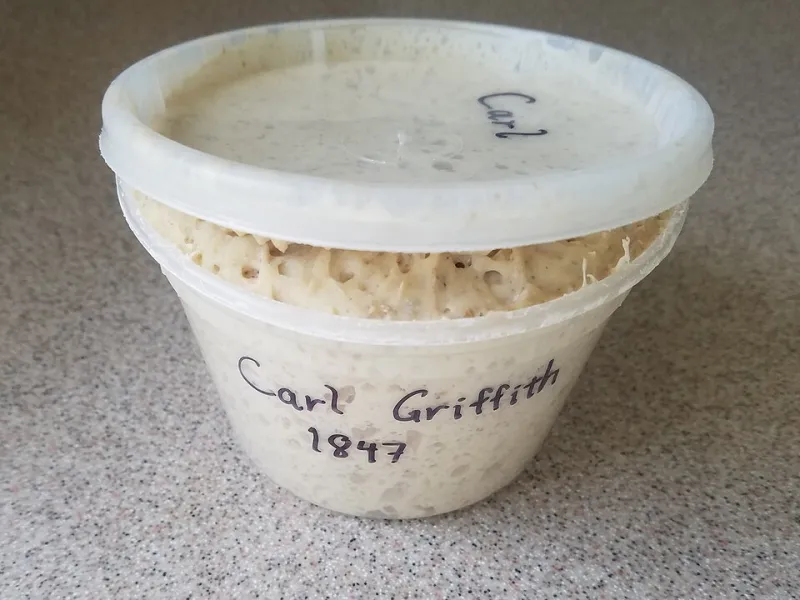
Photo: Anon423, CC BY-SA 4.0, via Wikimedia Commons
The Jar on the Counter That Started Everything
His name is Kevin.
Kevin lives on my neighbor Dana's kitchen counter in a mason jar wrapped in a dish towel printed with sunflowers. Kevin gets fed twice a day. Kevin has his own Instagram highlight reel. Kevin has outlasted two of Dana's houseplants, one relationship, and what she describes as "a very dark situationship with a gym membership."
Kevin is a sourdough starter. He is made of flour and water. He is, scientifically speaking, alive in the way that bacteria are alive — which is to say, barely, and not in any way that should warrant the level of emotional investment Dana has committed to him.
And yet here we are.
How Did We Get Here, Exactly?
Somewhere in the fog of 2020, the American public collectively decided that baking bread was not just an activity but a calling. The sourdough starter became a symbol of resilience, self-sufficiency, and the deeply human need to nurture something when the outside world felt like a dumpster fire wearing another dumpster fire as a hat.
Fine. That part made sense. We were all cooped up. We needed projects.
But here's the thing: the pandemic ended (more or less), and the starters stayed. They multiplied. They got names. They got personalities. People started referring to their starter's "mood" and "temperament" and saying things like "Gerald has been sluggish this week, I think he's stressed" with the same concerned energy previously reserved for elderly relatives and difficult teenagers.
And nobody — not one single person — stopped to ask: are we crazy, or what?
The Psychology of Feeding Something That Cannot Say Thank You
Let's be honest about what's actually happening here. A sourdough starter is, functionally, a comfort object for adults who have been told they're too old for comfort objects. It requires daily attention. It responds to your care in measurable, visible ways. It bubbles. It rises. It delivers results in the form of a warm, crusty loaf that your entire household will consume in under twelve minutes.
For a generation drowning in abstract productivity — endless Slack threads, metrics that don't mean anything, jobs where the output is a PDF nobody reads — the sourdough starter is a revelation. You feed it, it grows. You bake it, you eat it. The feedback loop is immediate. The satisfaction is tangible. There's no quarterly review. There's no algorithm deciding whether your starter performed well this week. The starter just... does its thing, and you did your part, and the bread is proof.
Psychologists would call this "a healthy locus of control." The rest of us call it "the only thing in my life that makes sense right now."
The Names, Though. We Need to Talk About the Names.
A completely unscientific survey of people I follow on social media reveals the following sourdough starter names currently in active rotation across the United States: Kevin, Doughstoyevsky, Yeastie Boys, Gluten Tag, Ferment Gump, Sir Rises-a-Lot, and — my personal favorite — Oprah Winferment.
The naming instinct is not random. It is, if you squint at it philosophically, a declaration of relationship. You don't name things you're indifferent to. You name things that matter. You name things you're going to talk about — and, let's be real, things you're going to talk to.
Because yes. People talk to their starters. They apologize when they forget a feeding. They offer words of encouragement before a bake. They narrate the process the way a sportscaster narrates a close game. "Come on, buddy. You've got this. Rise for me."
Is this unhinged? Technically, yes. Does it also make complete emotional sense given the state of modern life? Also yes.
The Betrayal of the Failed Batch
Nothing — nothing — prepares you for the grief of a starter that goes wrong.
Ask anyone who has lost one. The flat loaf that refuses to rise. The starter that develops an alarming pink tinge. The batch you left too long because you had a work emergency and came home to something that smelled like nail polish remover and broken promises. The mourning is real. People post about it on Reddit with the energy of someone delivering bad news at a family gathering.
"I think I killed Brenda," one user wrote in the r/sourdough community, garnering 847 sympathetic comments. "She was with me for three years."
Three years. For a jar of fermented flour.
But here's the thing about that grief: it's also proof of investment. You can't be devastated by something you didn't care about. The failed batch hurts because you showed up, consistently, over time, and nurtured something — and it didn't work out. That's not irrational. That's just... loss. Dressed in an apron.
What the Sourdough Starter Is Really Teaching Us
Here's the uncomfortable truth lurking beneath all the bubbly, yeasty sentimentality: we are a culture that is profoundly starved for things we can actually affect.
We cannot fix the news. We cannot control the economy, the housing market, our bosses, or the inexplicable behavior of other drivers on the highway. We cannot make the people we love less complicated or the systems we navigate less exhausting. So we go home. We feed the starter. We watch it bubble. We bake the bread. We eat the bread. We feel, briefly, like people who are competent and present and capable of keeping something alive.
And maybe — just maybe — that's not crazy at all.
Or maybe we've all just collectively lost the plot and the bread is a coping mechanism with a better PR strategy than therapy.
Either way, Kevin is thriving. And honestly? Good for Kevin.