We Got Our Dogs Therapists Before We Got Ourselves Therapists, and Honestly That Tracks
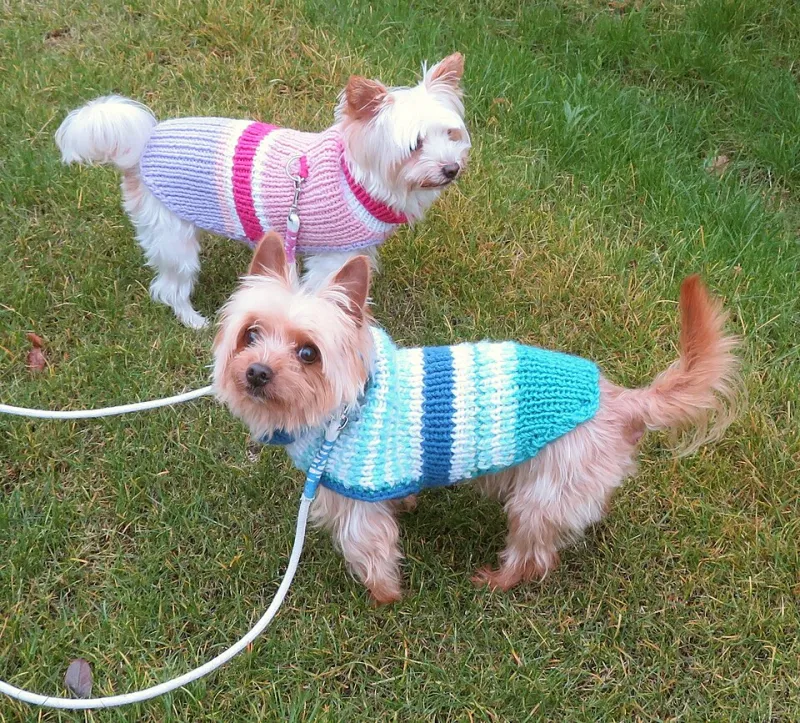
Photo: Sciencia58, CC0, via Wikimedia Commons
Let me paint you a picture. It's a Tuesday evening in suburban Ohio. A woman named Brenda is on the phone with her dog's behavioral therapist — yes, that is a real job title that real people hold — discussing whether Muffin's separation anxiety stems from a traumatic experience at PetSmart or simply from the fact that Brenda has not left the house without Muffin in approximately fourteen months.
The therapist, who charges $175 per session, suggests they try a weighted vest. Brenda already owns three.
Muffin, for her part, is asleep on the couch. The $400 orthopedic couch. The one Brenda bought after reading a blog post that said regular furniture causes hip dysplasia. Brenda herself sleeps on a mattress from 2014 that she keeps meaning to replace.
Are we crazy? Oh, we absolutely are. But we're crazy with feelings, and that matters.
The Emotional Support Industrial Complex
At some point in the last decade — roughly around the same time that "self-care" became a billion-dollar industry and we all started journaling about our inner child — Americans collectively decided that pets weren't just companions. They were co-regulators. Trauma-informed cuddle units. Furry extensions of our own psychological needs dressed up in bandanas from Etsy.
The pet industry in the United States now generates over $136 billion annually. That's more than the GDP of several small nations. We are spending money on our animals at a rate that would make previous generations genuinely concerned for our well-being, which, ironically, is the exact reason we got the pets in the first place.
Anxiety medication for dogs is now a routine prescription. CBD treats. Melatonin gummies. Puzzle feeders designed to stimulate cognitive function. Doggy daycare facilities with nap rooms, sensory play areas, and — I cannot stress this enough — report cards. Actual written evaluations that parents read with the same nervous energy they once reserved for their kids' kindergarten assessments.
"Biscuit had a great day today but struggled with sharing the rope toy." Biscuit is a golden retriever. Biscuit does not have feelings about sharing. Biscuit has feelings about squirrels.
The Instagram Problem Nobody Wants to Acknowledge
Here is where things get philosophically uncomfortable: the pet Instagram account.
Millions of American pets now have their own social media presence, curated by their owners with the kind of creative dedication that, if redirected, could probably solve several infrastructure problems. The dog has a theme. The cat has a brand voice. The rabbit — God help us — has a content calendar.
Some of these accounts have hundreds of thousands of followers. More than the owners themselves. And rather than this being a source of mild embarrassment, it has become a source of identity. "Oh, you might know me from my dog's account," is a sentence that real adults say out loud to other real adults at dinner parties, and everyone just nods like this is completely normal.
To be clear: it is not normal. It is a beautiful, chaotic symptom of a culture so desperate for connection that we've started routing it through animals who have no idea they're famous and would eat a shoe if given the opportunity.
The Vet Bill That Rivals Your Rent
Nothing crystallizes modern pet parenthood quite like the veterinary estimate conversation. You know the one. You sit in that little room with the paper-covered table while a very kind vet tech explains that your cat, Duchess, needs a procedure that costs somewhere between "painful" and "genuinely reconsidering your life choices."
And you say yes. Obviously you say yes. Because Duchess is not just a cat — Duchess is your emotional anchor, your reason for coming home, your soft and purring proof that something in this world needs you specifically. The $3,200 dental surgery is not about Duchess's teeth. It's about yours.
Pet health insurance has exploded for exactly this reason. Americans are now purchasing monthly plans for their animals with the same resigned practicality they once reserved for their own coverage — except, notably, more people have insurance for their pets than for their actual teeth.
Let that one breathe for a second.
The Loneliness Loophole
Here is the part where we stop laughing for exactly one paragraph, because there's something genuinely worth saying underneath all of this.
Americans are lonely. Staggeringly, statistically, measurably lonely. We have fewer close friends than any previous generation on record. We live farther from family. We work from home in apartments where the only living thing that greets us at the door has four legs and no concept of our quarterly review.
Pets fill that gap in ways that are real and documented and not remotely trivial. The bond between humans and animals is ancient and legitimate. Therapy animals do actual therapeutic work. The comfort of a dog at your feet on a hard day is not nothing — it is, in fact, quite a lot.
But there is a difference between genuine companionship and emotional avoidance with better fur. There is a distance between loving your pet and constructing an elaborate alternate relationship to sidestep the messiness of loving other people. And that line — the one between "my dog is my best friend" and "my dog is the only one who truly understands me and also has a verified Instagram account" — is worth at least occasionally squinting at.
So Where Does That Leave Biscuit?
Biscuit is fine. Biscuit is better than fine — Biscuit has a memory foam bed, a socialization schedule, and a Halloween costume already ordered from a small business on Etsy. Biscuit is, by any reasonable measure, living his absolute best life.
The question is whether the humans in Biscuit's orbit are doing the same.
Because here's the thing about animals: they are remarkably good at accepting love. They are not, however, particularly skilled at giving you the kind of feedback that leads to personal growth. Your dog will never tell you that you're avoiding intimacy. Your cat will not gently suggest that maybe the reason you're crying at 11 PM isn't about the TV show. Your rabbit does not have the emotional vocabulary to point out that you haven't called your sister in three months.
Pets are mirrors, not windows. They reflect the love you pour in, but they can't show you where else you might direct it.
So by all means — get the weighted vest for Muffin. Book the behavioral consultation. Order the birthday cake shaped like a fire hydrant. Love your animals with the full, embarrassing, Instagram-documented force of your entire heart.
Just maybe, once in a while, call a human too.
Biscuit would want that for you. Probably.