Congratulations, You Spent $4,000 to Own Absolutely Nothing (Visibly)
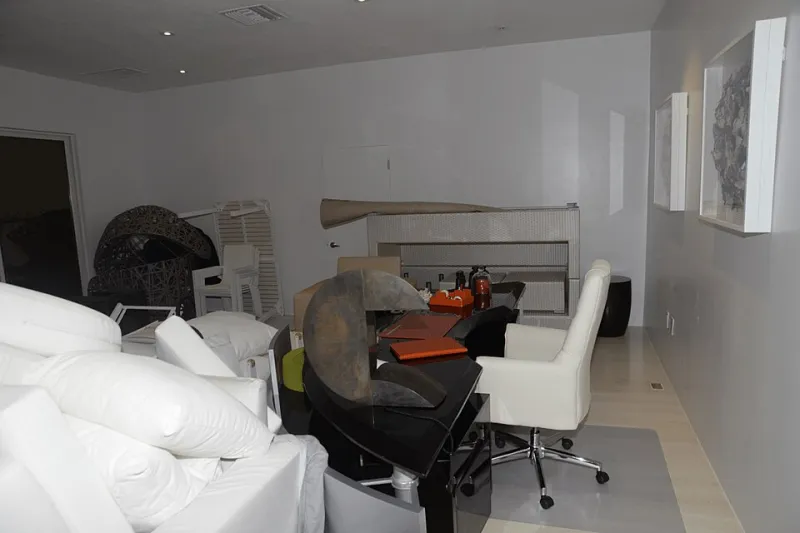
Photo: Federal Bureau of Investigation, Public domain, via Wikimedia Commons
Let's set the scene. You walk into someone's living room and it looks like a Swedish architect had a fever dream about a Japanese monastery. There's a single ceramic bowl on a floating shelf. A throw blanket draped at a scientifically precise angle. Walls the color of a sigh. And somewhere — everywhere — baskets. Woven, stacked, nested, labeled, and arranged with the kind of obsessive care usually reserved for neurosurgery.
This, apparently, is minimalism. And we are all very, very crazy for pretending it is.
The Philosophy That Ate Itself
Minimalism started as a genuine countercultural idea. Thoreau went to Walden Pond. monks gave up earthly possessions. Marie Kondo told us to thank our socks before releasing them into the void. The core message was simple: own less, stress less, live more.
Noble. Genuinely noble.
Then Pinterest got involved, and everything went completely off the rails.
Suddenly "owning less" required a very specific aesthetic infrastructure. You couldn't just have less stuff — you had to have less stuff in the right way, displayed correctly, in a cohesive neutral palette, preferably with a eucalyptus sprig somewhere in the frame. The movement that was supposed to liberate us from consumerism quietly became one of the most demanding consumer identities in modern American life.
The irony is so thick you could store it in a decorative jute basket.
The Basket Economy Is Booming and You're Funding It
Here is a number that should haunt you: the global home storage and organization market is worth tens of billions of dollars. A significant chunk of that is Americans buying containers to hide the fact that they own too many containers.
Walk through any Target, HomeGoods, or the hallowed aisles of The Container Store — a place where people genuinely go for fun — and you will find an entire civilization built around the idea that the right vessel will finally bring you inner peace. Wicker baskets. Wire baskets. Fabric bins with little leather pull-tabs. Wooden crates with chalk labels. Linen pouches for things that already have perfectly adequate packaging.
The minimalist home doesn't have less stuff. It has the same amount of stuff, maybe more, but now all of it is inside something else. It's clutter wearing a trench coat. It's chaos with a subscription to Architectural Digest.
And we are out here spending genuinely alarming amounts of money to achieve this illusion. That set of matching cabinet organizers from a boutique organization brand? One hundred and forty dollars. The custom closet system that makes your sweaters look like they're on display at a museum? Several thousand. The linen storage ottoman that serves no function except to sit there being tasteful? Three hundred and twenty-five dollars, and yes, you felt good about it.
"I've Really Simplified My Life," She Said, Surrounded by Seventeen Throw Pillows
There is a particular species of person — and look, we say this with love — who will describe their lifestyle as "really minimal" while standing in a room that contains more decorative objects than a Pottery Barn catalog shoot.
The key distinction, they will explain, is intentionality. Each item was chosen. Each item has a purpose. Each item sparks joy, serves a function, or contributes to the overall visual harmony of the space.
This is genuinely a thing people say with straight faces.
The seventeen throw pillows are intentional. The gallery wall of identically framed neutral art prints is intentional. The collection of smooth river rocks in a shallow ceramic dish — which serves no purpose on this earth except to exist — is deeply, profoundly intentional.
At what point does a curated collection of intentional objects become just... a collection of objects? We're asking. Sincerely. Someone help us with the math.
The Instagram Industrial Complex
Let's be honest about where most of this energy is actually going. The minimalist home isn't primarily designed to be lived in. It's designed to be photographed.
The natural light hits the linen curtains. The single artisan mug sits on the raw wood coffee table. The corner of the room where your child's LEGOs definitely live has been carefully cropped out. You post it with a caption about slowing down and being present, and forty people comment "so peaceful" and mean it.
This is the grand hustle at the heart of modern minimalism: the aesthetic of having nothing requires constant, exhausting effort to maintain. Real life — with its mail piles and charging cables and the fact that humans need more than one bowl — keeps threatening to intrude. So you spend your weekends tidying, reorganizing, and quietly moving clutter from one photogenic container to another.
Peaceful is not the word we would use. Committed, certainly. Maybe a little unwell.
What We Were Actually Looking For
Here's the thing, though — and we're going to get briefly sincere before returning to our regularly scheduled mockery — the impulse underneath all of this is completely understandable.
American life is loud, cluttered, overstimulating, and relentless. The idea of a calm, ordered space where your brain can take a breath? That's not crazy. That's human. The desire to feel like you have some control over your environment, especially when the outside world is an absolute circus? Valid. Deeply valid.
We're not here to shame anyone for wanting a serene living room. We're here to gently point out that buying forty-seven baskets to achieve that serenity is, objectively, a little funny.
You went looking for less and came home with more. You tried to simplify and ended up with a hobby that requires its own storage solutions. You wanted freedom from stuff and accidentally started a stuff collection with better branding.
And somehow, the basket labeled "MISC" in hand-stamped leather lettering is the most honest object in your entire home.
The Verdict
Minimalism, as a lived practice, is admirable. Minimalism, as an aesthetic performance funded by four figures of HomeGoods receipts, is the funniest thing happening in American interiors right now.
Keep your baskets. Keep your intentional river rocks. Keep your single artisan mug that you photograph but never actually use because it doesn't fit under your coffee maker.
Just maybe — maybe — stop calling it simple.
Are we crazy, or is the most expensive thing you can do in 2025 own the appearance of owning nothing? Don't answer that. We already know.